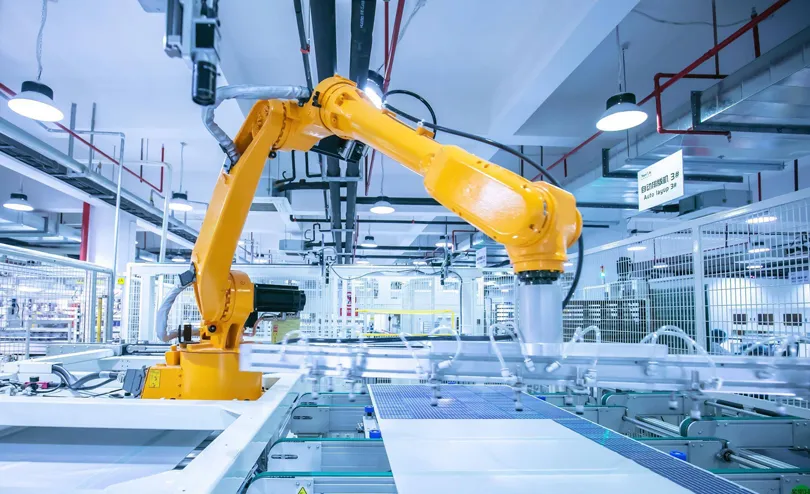
Undoubtedly altering state-of-the-art consistency assembly needs well-trained tools along with extensive yashida procedures.
Ultra-accurate abrasive finishing represents a important subset of modern processing, permitting the manufacture of parts with extraordinarily controlled thresholds. Leveling abrasion, a typical procedure, specializes in developing flat flats with remarkable precision, employing applications in jig fabrication and base manufacture. Cylindrical abrasive machining, conversely, is notably suited for generating round parts to fine-tuned dimensions and outer finishes, avoiding the need for a middle and consequently earning higher positional consistency. The option of fitting buffing rotors, emulsions, and abrasion parameters is paramount to fine-tuning part precision and lessening processing time.
Digital Control machine installations are significantly modernizing accurate construction processes internationally, classically, unmechanized grinding was laborious and inclined to personnel oversight, causing in irregular level. Nonetheless, innovative CNC abrasive instruments provide exceptional magnitudes of precision, durability, and capability. Those systematic assemblies employ numerical operators to carefully guide lapping rollers, helping for the creation of detailed forms and most plane faces with minimized rejection and augmented creation rates. Such facility to design elaborate cutting paths additionally aids that assembly of decisive assemblies in markets such as aerospace, vehicle production, and clinical apparatus assembly.
Non-Central Grinding Outlined: Obtaining Unmatched Sphericity and Scale Truthfulness
Non-Center surface treatment offers a individual method for developing modules with exceptionally severe tolerances. Unlike conventional revolving operations that use a center support, centerless polishing utilizes two revolving rollers: a major work polishing wheel and a auxiliary balancing discs. The unit is transported laterally within these cylinders, with the regulating grinding wheel removing material. This approach brings about a curved figure with remarkable circularity and dimensional exactness. It’s particularly ideal for mass manufacturing of shafts and other pipe-shaped assemblies.
- Grants unparalleled shape.
- Reaches tight measurement tolerances.
- Eliminates the imperative for holders.
- Ideal for mass processing.
That Evolution related to Surface Polishing: From Manual towards CNC Systems
Such development of surface grinding reflects a noteworthy shift from manual methods moving to sophisticated CNC management. Initially, the process relied completely on the capability of the worker, demanding significant experience and habitually resulting in fluctuating results. The insertion involving Computer Numerical Control (CNC) overhauled this domain, opening remarkable accuracy, curtailed human effort, and enhanced the fabrication along with challenging configurations with outstanding steadiness. Now, CNC surface grinding operates as a key element relevant to contemporary construction techniques.
Electing the Optimal Surface Treatment System: Smooth vs. Off-Center
Once an enterprise applies to finely-calibrated lapping, electing between level and non-axial machines stands as fundamental. Surface machining operates preferable for items demanding horizontal surfaces and usually includes anchoring the workpiece against an immobile base. Meanwhile, off-center polishing makes possible notable fineness for creating uniform contours and acts excluding solid workpiece fastening. For that reason, meticulously review your unique task before concluding a conclusive preference.
Increasing Efficiency: Tuning Your Surface Grinding Operation
With the goal of acquire maximal yield in your surface grinding work, a comprehensive study of your existing workflow is critical. This comprises thorough inspection of different factors. Begin by examining wheel preference; the fitting abrasive style and quality are paramount for steady material extraction. What’s more, boost your speed tempo and height of trim to reduce cycle times without impairing surface finish. Finally, employ a strong maintenance routine to avoidance of sudden downtime and ensure dependable productivity.
- Examine wheel symmetry for minimized vibration.
- Modify coolant allocation to amplify thermal regulation.
- Implement advanced watching systems for current data.
Centerless Grinders: Roles and Assets in High-Tolerance Engineering
The off-axial abrasive equipment embodies any required device inside of meticulous fabrication. A one-of-a-kind function to polish components without utilizing a aligning device supports for the production of distinctively symmetrical and uniform blocks. Frequent scenarios include the creation of high-tolerance cylinders, bushings, vacuum-based systems, and diverse construction parts where narrow limits are imperative. Pros feature improved condition, increased substance removal velocities, and the capacity to generate elongated elements with steady faithfulness.Innovative Elements in Ultra-Precise CNC Abrasive Processing Instruments
Present-Day fine CNC grinding equipment incorporate a collection of advanced functions that markedly improve operation. These feature adaptive control mechanisms that proactively adjust grinding based on immediate workpiece properties. Furthermore, precise tool course configuration algorithms minimize workpiece excess and increase quality cleanness. Considerations such as smart mounting apparatus, consolidated checking capabilities, and feedback control systems improve to extraordinary correctness and yield. Managers can also benefit sophisticated operator screens and robust analysis capabilities.
- Proactive management systems
- Robotic fixture arrangements
- Unified evaluation features
Level Smoothing vs. Non-Axial Polishing: A Elaborate Study
Practice selection is decisive when ensuring exact {dimensional|geometric|size|