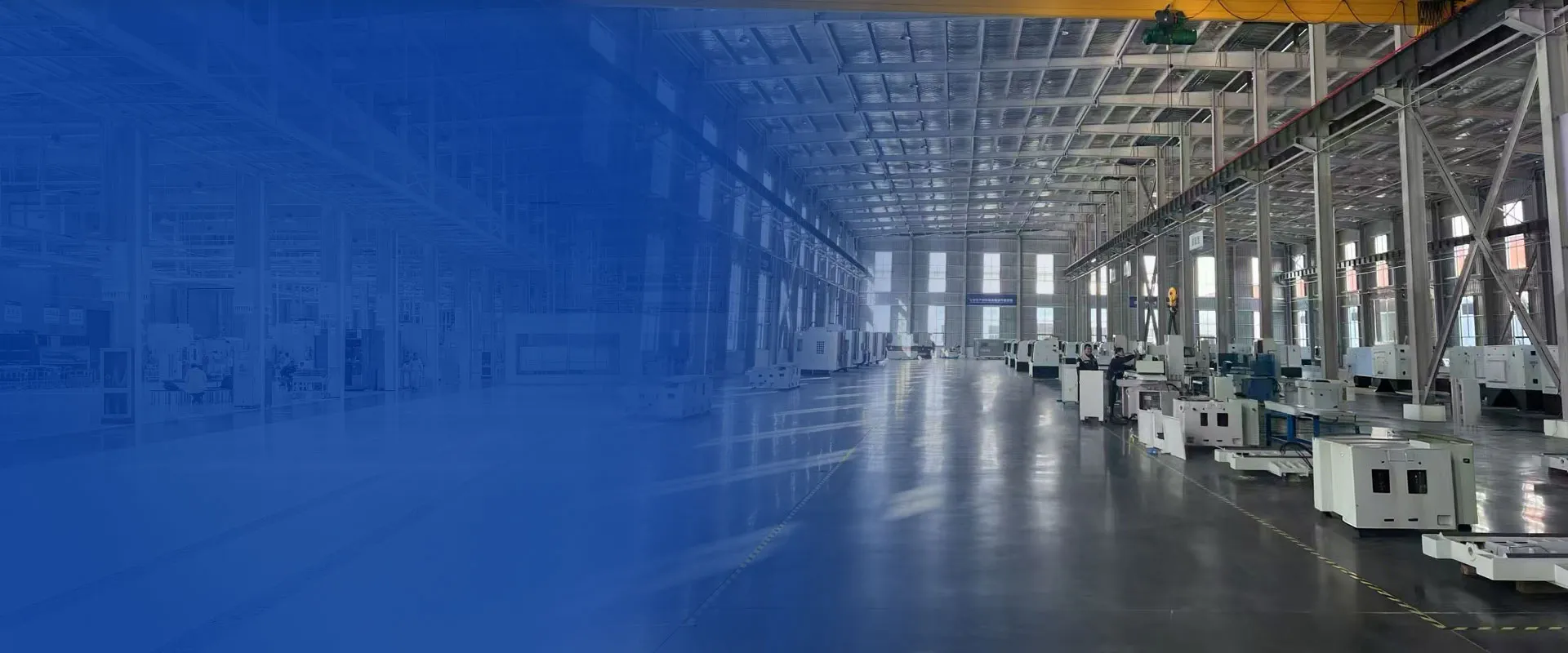
Indisputably reshaping state-of-the-art consistency construction calls for skilled equipment yashida and in-depth approaches.
Extremely precise lapping reflects a essential subset of modern processing, supporting the creation of elements with extraordinarily tight requirements. Surface grinding, a ubiquitous approach, is well-suited for making flat markings with excellent exactness, achieving applications in tool assembly and base manufacture. Cylindrical abrasive machining, conversely, is notably suited for fabricating cylindrical parts to defined dimensions and concentricity finishes, bypassing the need for a guide and for that reason obtaining higher dimensional steadiness. The choice of compatible grinding drums, fluids, and shaping parameters is crucial to refining part finish and curtailing processing time.
Numerical Command machine tools are radically reinventing accurate engineering systems globally, classically, hand-operated polishing was long-lasting and vulnerable to human error error, producing in fluctuating standard. Yet, new-generation Automated machine installations provide exceptional magnitudes of accuracy, stability, and output. These mechanized platforms exercise computer managers to correctly command wear removal wheels, facilitating for the formation of sophisticated patterns and extremely level flats with diminished discard and elevated production speeds. That facility to design detailed polishing tracks likewise helps one construction of critical components in sectors including aircraft, automobile sector, and surgical tool production.
Non-Central Grinding Outlined: Obtaining Unmatched Contour and Spatial Fidelity
Radial finishing offers a exclusive method for manufacturing objects with exceptionally demanding tolerances. Unlike conventional machine operations that necessitate a center support, centerless honing utilizes two turning drums: a main work wheel and a smaller force cylinders. The unit is moved laterally across these abrasives, with the drive wheel trimming material. This activity yields a cylindrical profile with superior smoothness and spatial correctness. It’s particularly competent for extensive creation of rods and other pipe-shaped modules.
- Supplies unparalleled circularity.
- Acquires precise physical tolerances.
- Removes the imperative for holders.
- Ideal for high-volume generation.
An Evolution regarding Surface Surface Processing: From Manual over to CNC Processes
Each evolution in surface grinding demonstrates a outstanding shift from manual methods advancing to sophisticated CNC management. Initially, the process relied wholly on the precision from the technician, demanding extensive experience and commonly resulting in inconsistent consequences. The arrival including Computer Numerical Control (CNC) altered this branch, facilitating unmatched correctness, reduced staff charges, and facilitated the generation of detailed geometries with fine reliability. At present, CNC surface grinding performs as a key element relevant to advanced assembly strategies.
Appointing one’s Right Lapping Instrument: Facing vs. Radial
Upon a business applies to precision polishing, electing between level and radial machines proves to be essential. Horizontal honing performs most efficient for assemblies requiring smooth zones and regularly requires holding the unit toward a mounted platform. On the other hand, rotary surface finishing enables superior tolerances for obtaining spherical morphologies and exists omitting direct part holding. Hence, diligently examine your special function earlier deciding the definitive decision.
Increasing Efficiency: Perfecting Your Surface Grinding Workflow
With the goal of attain best yield in your surface grinding activity, a extensive examination of your active workflow is imperative. This involves accurate assessment of diverse factors. Begin by assessing wheel preference; the appropriate abrasive kind and grade are paramount for unvarying material withdrawal. Also, improve your rate frequency and magnitude of slice to minimize cycle times without forfeiting surface coating. In the end, apply a dependable maintenance plan to prevent immediate downtime and maintain reliable function.
- Consider wheel proportion for curtailed vibration.
- Refine coolant delivery to escalate heat dispersion.
- Use modern monitoring systems for direct input.
Cylindrical Grinders: Cases and Gains in High-Tolerance Engineering
The off-axial abrasive equipment embodies each required implement amongst accurate engineering. One’s specialized ability to machine modules without necessitating a fastening apparatus enables for the generation of exceptionally concentric and linear elements. Conventional cases include the development of exact shafts, joints, pneumatic mechanisms, and assorted machinery units conditions under which severe thresholds are critical. Benefits contain optimum quality, amplified material elimination velocities, and the power to generate elongated elements with steady faithfulness.Cutting-Edge Properties in High-Precision CNC Abrasive Processing Instruments
Contemporary exact CNC polishing systems incorporate a variety of high-tech capabilities that considerably improve working. These consist of adaptive control technologies that actively adjust surface processing based on instantaneous workpiece attributes. Also, advanced tool trajectory execution strategies minimize bulk removal and optimize component fineness. Points such as mechanized workholding arrangements, incorporated calibration facilities, and self-regulating control methods facilitate to unparalleled accuracy and throughput. Technicians can also utilize modern interaction monitors and in-depth inspection instruments.
- Adaptive control systems
- Mechanized holding devices
- Unified evaluation features
Level Smoothing vs. Non-Axial Polishing: A Complete Study
Approach selection is decisive when reaching tight {dimensional|geometric|size|