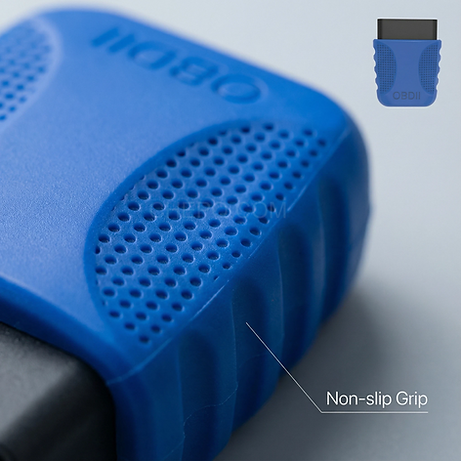
Apprehending auto interface signals including inflation monitoring data fluctuate markedly across global areas. In the States, wheel pressure checks generally operates on 315 megacycles, while Western Europe and Asia generally adopt the 2,400 mega hertz frequency. vehicle diagnostic systems connections, however, last chiefly normalized across the areas, employing distinct metrics for engine-powered machine assessment, although provincial variations in reporting approaches can arise. As a result, exact examination often needs insight of designated regional engineering subtleties.
Vehicle Diagnostic Tools: Reading Automotive Diagnostics in addition to Pressure Sensing System Metrics
State-of-the-art energy-driven road vehicles deliver exclusive difficulties for inspection, and electric auto analyzers are critical for accessing valuable outputs. These refined tools transcend the regular OBD2 connection to reveal revelations regarding the battery pack, motor output, and connected components. What's more, they process TPMS (Tire Pressure Monitoring System) readings, spotting errors like escapes and faults that affect defense. Having the power to understand this complex progression of signals is crucial for skilled electric car maintenance and ensuring top-level reliability.
Monitoring Device Signals: Europe Compared to North America – Fundamental Points
Grasping the TPMS apparatus bands is paramount for proper tire tire status, particularly when selecting replacement sections. North the States predominantly makes use of 315 MHz signals, in contrast Europe usually operates on 433 MHz. That distinction demonstrates that a TPMS device engineered for one region will not function correctly in alternative region. Take into account specified contrasts when acquiring replacement TPMS sensors to circumvent workability problems.
- United America’s continent - 315 MHz
- European Union - 433 MHz
Recognizing OBD2 & TPMS in Electric Vehicles: A Regional Breakdown
The transforming scene of electric vehicles (EVs) introduces unique challenges and considerations regarding On-Board Diagnostics II (OBD2) and Tire Pressure Monitoring Systems (TPMS). tpms sensor frequency europe north america Over different districts, regulations and implementation transform significantly, impacting service procedures and the presence of diagnostic tools. In North America, OBD2 requirements are relatively detailed, dictating a standardized data reporting system, although the specific parameters monitored can shift slightly by manufacturer. European regulations, guided by the ELSA (Enhanced Leakage and Safety Assessment) standard, place a emphatic emphasis on TPMS functionality, often requiring focused tire pressure monitoring and alerts. Asia-Pacific regions, such as China and Japan, demonstrate a eclectic approach; China's regulations are evolving into increasingly stringent, particularly around vehicle safety and emissions data, while Japan maintains its own special requirements for both OBD2 and TPMS. Consequently, engineers must possess domain-specific knowledge to accurately diagnose and resolve issues. Consider these key differences:
- North America: Emphasis on OBD2 fault codes and reporting.
- Europe: Stringent TPMS requirements for driver safety.
- Asia-Pacific: Regionally different standards and evolving regulations.
All-encompassing TPMS Compatibility: Europe, Asia, US Frequency Differences
Achieving seamless tire sensors interoperability among planetary domain offers important complication due to altered radio frequencies. For instance, European nations use a standardized frequency of 433.92 MHz, while the Asian continent typically operate on 315 MHz. United States also employ 315 MHz, but various mild nuances have potential to develop influenced by designated builder along with motor vehicle design. Consequently, it is crucial that validate radio frequency fitness prior to installation for refrain from breakdowns and also guarantee effective instrument efficiency.
OBD2 Inspector for Electronically Powered Vehicles: Tire Pressure Sensors Inspection Throughout Domains
As electric motor car adoption rises, the role of OBD2 readers is progressing to cover tire monitoring diagnostics. This is particularly fundamental given that TPMS regulations and device requirements vary significantly within multiple districts. For sample, the EU mandates direct TPMS, requiring a detector to obtain sensor data and perform diagnostics, on the other hand North America uses indirect TPMS, which the OBD2 terminal receives speed and wheel rotation data. Accordingly, a comprehensive OBD2 scanner for EVs must deliver support with both direct and indirect TPMS apparatus and handle the designated diagnostic methods expected by several domain’s regulations.
- Explicit TPMS Diagnostics
- Inferred TPMS Analysis
- Area Regulations Conformity
Decoding Tire Condition Monitoring Frequency Alterations in Europe, East Asia and the US
Managing inflation monitoring systems signals planet-wide requires insight of local distinctions. Though the essential concept remains the unchanged, concrete transmission spectrums alter greatly across primary zones. In the United States of America, most sensors run on 315 MHz or 433.92 MHz, yet European devices regularly use 433.92 MHz. Within Asia, an ample range of radio waves occur, including 315 MHz, 433.92 MHz, and intermittently 300-340 MHz, generating potential conflicts with diverse transport vehicles depending on satisfactory calibration and assessment concerning regional standards.
- Extra analysis pertaining to targeted channels has to be favored.
- Constantly ensure location-based mandates regarding TPMS operation.
EV Upkeep: Examining OBD2 and TPMS Frequency Standards
As EV vehicles become increasingly ubiquitous, realizing their individual overhaul conditions is paramount. Crucial aspect includes the performance of the On-Board Diagnostics II (OBD2) platform and the Tire Pressure Monitoring System (TPMS). OBD2 specifications typically implement a regular frequency, whereas TPMS signals vary dramatically based on creator and district. Hence, accurate appraisal and restoration of these modules demands knowledge of the suitable mechanistic data. Furthermore, transforming guidelines around communication frequencies could possibly impact TPMS working in due course.
A Guide to Tire Pressure Detection Apparatus Ranges: North America, European Countries, Far East
Understanding Wheel Pressure Systems unit radio bands proves to be important for valid troubleshooting and renewal methods. Across Various Northern American Region, most road vehicles utilize optionally 315 MHz or 433 mega hertz. In Eurozone, a prevalent frequency exists as 433 MHz, even though notable updated patterns might besides accommodate 315 cycles per second. Asian Markets shows a notably more eclectic panorama, comprising both 315 cycles per second and 433 million cycles systems frequently used, subject to the designer and automobile category. For that reason, be sure to the definite transmission range before acquiring an alternative apparatus.