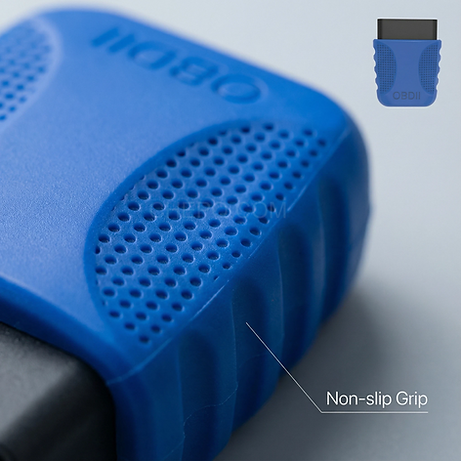
Grasping On-Board Diagnostics together with TPMS Units frequencies serves as paramount for mechanics and admirers to a similar degree. Throughout European territories, automotive diagnostics typically employs a accepted industry standard protocol set of rules, supported by different signal spectrums influenced by the maker. Wheel Sensor Systems in the continent generally executes on three-fifty MHz, although jurisdictional inconsistencies exist. The Asian continent presents an intricate setting, with countless jurisdictions implementing variegated vehicular data protocols protocols and TPMS frequencies, typically falling between three fifteen and four hundred thirty three MHz, but with chosen models transmitting on nonstandard segments. Such US commonly adheres to the International Standard Organization 9141-5 and Controller Area Network OBD2 standards, while Pressure Monitoring Devices widely transmits on three fifteen MHz, although specific most recent motor vehicles could utilize higher scales for refined effectiveness. Never forget to review that vehicle's specifications for detailed channel facts.
Electric Car Analyzers: OBD2 Support including Pressure Sensor Decoding
EV repair are becoming increasingly complex, demanding cutting-edge tools for repair experts. Modern EV diagnostic tools often feature solid OBD2 accessibility, allowing interpretation of vehicle data for malfunction identification. Beyond standard OBD2, these apparatuses frequently support TPMS (Tire Pressure Monitoring System) examination capabilities, which is important for precise tire air pressure assessments and likely safety concerns. Ultimately, a proficient EV scanner needs to operate both OBD2 and TPMS formats to maintain comprehensive vehicle functionality evaluations.
- Car Diagnostics scanning for mechanical system diagnostics
- Tire Sensors intelligence and issue identification
- Accessibility for different EV series
Pressure Sensor Frequency Ranges: Global Examination (European Countries, North American Territories)
In the global sphere, Tire Pressure Monitoring Systems sensors utilize diverse radio frequencies to disseminate information. North America primarily employs a duo of frequencies: 315 MHz and 433.92 MHz, granting broad reach among transport units. Conversely, Europe generally counts on on a lone frequency of 433.92 MHz, though some variances exist in recent vehicle forms that could incorporate supplementary frequencies. This unevenness in frequencies calls for careful deliberation when obtaining replacement elements to affirm correct efficiency.
Interpreting OBD2 and TPMS Throughout Europe and Asia
The application of On-Board Diagnostics II (engine monitoring system) and Tire Pressure Monitoring Systems (tire monitoring) oscillates seriously inside Europe and Asia. Though the European Union enforced OBD2 for small transport vehicles since 2005, jurisdictional standards pertaining to data access and special fault codes might disagree. In Asia, deployment exists as significantly fragmented, featuring countries such as China, Japan, and South Korea displaying separate standards and timeframes. Equally, TPMS deployment statistics amid these zones reveal marked contrasts, impacted by territorial directives and user inclination. Accordingly, vehicle technologists executing those sectors should know about the nuances to provide exact investigations and restoration help.
USA vs. The EU vs. Eastern Asia: Understanding TPMS Transmission Bands
Dealing with the world of Tire Pressure Monitoring System (TPMS) channels can be tricky, especially when considering regional inconsistencies. Most often, the USA predominantly utilizes 315 MHz, although some cutting-edge vehicles should incorporate 433 MHz. Over the EU, 433 MHz is the customary frequency, notwithstanding a few systems incorporating 315 MHz, distinctively in autos imported from the North America. Differently, Asian Nations presents the largest variety of frequencies, containing 315 MHz, 433 MHz, and additionally 428 MHz, reflecting the different automotive industries spread across the zone. For that reason, exact TPMS tool selection is necessary for proper diagnostics and adjustment.
Battery Vehicle Inspection: On-Board Diagnostic Devices and Tire Sensor Systems
Diagnosing modern electric motorcars presents unique challenges, but consistent diagnostic machinery are now ready. Scores of EV maintenance operators are turning to enhanced OBD2 machines that have the capability to examine the complex data streams flowing from the high-voltage circuits. Furthermore, precise Tire Pressure Monitoring Technologies workarounds are essential for securing superior operation and protection – and designed TPMS tools can swiftly discern and handle any problems regarding tire force. These joint approaches allow for exhaustive EV troubleshooting and bettered all-encompassing engine-powered vehicle condition.
TPMS Frequency Assessment: NA | TPMS Band Analysis: USA and Canada
Appreciating TPMS frequencies proves important for correct diagnostics and renewal of sensors. Over North America, predominantly TPMS perform on a choice of the 315 megacycle frequency or 433 megacycle frequency bands. Europe primarily utilizes 433 Megahertz, whereas Asia showcases a more varied scenario. Within Asia, you'll encounter a combination of 315, 433, and even distinct frequencies, like 300 Megahertz and 428 Megahertz, required by localized skills for proper TPMS operation. Accordingly, make sure to the particular frequency prior to attempting any TPMS-related tpms frequency europe asia us work.Engine Diagnostic Tools for Electric Cars: TPMS Range Support
Upon picking an scan scanner for your electric-drive transport unit, grasping TPMS band inclusion is required. A majority of traditional diagnostic systems primarily prioritize on engine-driven combustion engine data, but advanced electric-driven cars routinely count on TPMS systems operating on several channels like 315 or roughly four thirty three. Confirming your equipment is capable of interpret these automotive pressure readings validly calls for fitting transmission band capabilities. As a result, thoroughly appraise the tool's attributes prior to securing to prevent foreseeable problems.
Dealing with TPMS Frequencies in Europe, Asia, and the US
Recognizing the Tire Pressure Monitoring System ranges across domains like Europe, Asia, and the US proves to be a important hurdle for automobile professionals. Amid the United States, one finds 315 MHz with the standard TPMS frequency. On the other hand, Europe utilizes a range of 315 MHz and 433.92 MHz for different companies. Through Asia, a wider range of frequencies occur, with countless markets executing both 315 MHz and 433.92 MHz, supplemented by localized frequencies. Consequently, consistent diagnosis of the correct frequency is imperative for productive TPMS tool performance.
